

BES PortalLogin / BES OS
INLINE OZONE ENGINEERING

Draft Beer Line
Cleaning & Sanitation

Professional inline dissolved ozone cleaning for hygienic beer lines and consistent draft beer quality.
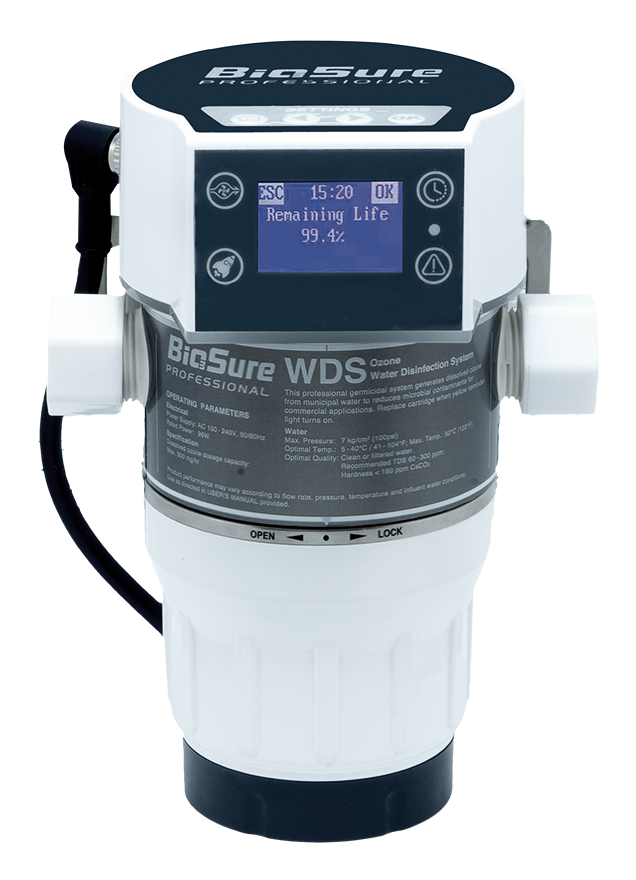
WDS3000X300 mg/hInline InstallationCleaning Mode OnlyFood Grade OzoneNo Chemical Residue
Official BES WDS3000X inline aqueous ozone generator
01 · OPERATING PROBLEM

Control Deposits Before They Affect Service

Remove biofilm and organic deposits before they affect hygiene, flow, foam, or beer quality.

Yeast & protein film
Biofilm
Organic residue
Beer Stone
02 · DEPOSIT ENGINEERING

Mineral Scale and Organic Film

Beer Stone is mineral scale, while organic film can accelerate its attachment.

Cleaner surface

Lower attachment tendency and slower deposit buildup.

Fouled surface

Organic film creates a rough layer that supports mineral attachment.

Aqueous ozone controls organic fouling but does not dissolve mineral Beer Stone.
03 · SYSTEM ARCHITECTURE

Draft Beer Inline Cleaning System

WDS3000X uses the building water supply to generate dissolved ozone inline and flush the isolated beer line through the faucet to drain.

SYSTEM ARCHITECTUREDraft Beer Inline Cleaning System

Building pressure drives once-through cleaning water to the faucet and drain.
01Fresh Water
02Isolation Valve
03Pre-Filter
04WDS3000X
05Dissolved Ozone
06Cleaning Adapter
07Beer Line
08Beer Faucet
09Drain
BAR SERVICE ZONE · SEMI-CUTAWAYMECHANICAL CLEANING ZONEINTERNAL BEER-LINE CHASEVISIBLE DRAINKEG ISOLATEDCLEANING COUPLER BANKKEG COUPLER / CLEANING ADAPTERSOLENOID VALVEOPEN DRAINBUILDING WATER PRESSUREINLINE TREATMENTBEER LINE · CLEANING MODE
BES water pre-filterWATER FILTER
Official BES WDS3000X aqueous ozone systemWDS3000XINLINE AQUEOUS OZONE
Beer FaucetFinal cleaning outlet
Beer Line0.14 L per selected line
Cleaning AdapterBeer keg isolated
Dissolved Ozone WaterOne-way supply to coupler
Open DrainVisible faucet discharge
Flow120 LPH
Ozone Output300 mg/h
Cleaning Time10 min
Dissolved Ozone2 ppm
CT20 ppm·min
StatusOPTIMIZED
CLEANING MODEBuilding-Pressure Cleaning Circuit
01Fresh WaterBuilding pressure drives the cleaning flow.
02Isolation ValveThe normally closed cleaning valve opens.
BES water pre-filter
03Pre-FilterWater is filtered before ozone generation.
Official BES WDS3000X aqueous ozone system
04WDS3000XDissolved ozone is generated inline.
05Dissolved Ozone WaterCleaning water travels to the selected coupler.
06Cleaning AdapterThe beer keg remains isolated.
07Beer LineCleaning water passes through the complete line.
08Beer FaucetFlow exits visibly through the faucet.
09DrainUsed cleaning water discharges once through to drain.
Flow120 LPH
Ozone Output300 mg/h
Cleaning Time10 min
Dissolved Ozone2 ppm
CT20 ppm·min
StatusOPTIMIZED
Cleaning waterBeer lineDrainOzone treatment sectionAnimated arrows show once-through, building-pressure flow to drain. No pump or return loop is used.
04 · OPERATING PROCEDURE

Ten-Step Cleaning Timeline

  1. 01Stop Beer Service
  2. 02Isolate or Disconnect the Beer Keg
  3. 03Connect Cleaning Adapter
  4. 04Open Fresh Water Supply
  5. 05Pre-Rinse
  6. 06Run Ozone Cleaning Water
  7. 07Maintain Required Exposure Time
  8. 08Drain Through Beer Faucet
  9. 09Final Rinse if Required
  10. 10Reconnect Keg and Purge Before Serving

Follow brewery, equipment-manufacturer, and local food-safety procedures.

05 · SIMULATION

Draft Beer Cleaning Simulation

Enter only the hydraulic and scheduling values required to size and validate the WDS3000X cleaning circuit.

Required Inputs

Mandatory Cleaning-Mode Confirmations
Engineering Assumptions

WDS MTE: 80% · Dissolved ozone target: 0.5 ppm · Pre-rinse: 2 line volumes · Final rinse: 1 line volume · EOG rated life: 1,000 operating hours.

06 · ENGINEERING RESULTS

Engineering Result Dashboard

Recommended ModelWDS3000X
Total Cleaning Flow120 LPH
Total Beer-Line Volume0.57 L
Flow Velocity1.87 m/s
Hydraulic Residence Time4.3 s
Ozone Exposure Time10 min
Line Volume Replacements140.3×
Water per Cleaning Event81.7 L
Annual Water Consumption4.25 m³
Generator Runtime / Event40 min
Estimated EOG Life346 months
Overall Engineering StatusOPTIMIZEDOPTIMIZED
Pipe geometryA = πD²/4 · V = A × LTotal 0.57 L
Active cleaning flowQ = flow per active line120 LPH
Hydraulic residencet = active line volume ÷ flow4.3 s
EOG projection1,000 h ÷ annual runtime28.8 years
07 · PERFORMANCE

Engineering Acceptance

Live C and CT results are checked against the approved project design basis.

Dissolved Ozone2 ppm
Contact Time10 min
CT Result20 ppm·min
Engineering StatusPASS
LIVE PERFORMANCEDissolved Ozone Concentration (C)
PASS

Calculated dissolved ozone concentration compared with the approved project standard.

0.00.61.21.82.40.02.55.07.510.0Contact Time (min)Dissolved Ozone (ppm)Minimum standard: 0.5 ppmContact time 0 min · Calculated C 2 ppm · Minimum standard 0.5 ppmContact time 1.7 min · Calculated C 2 ppm · Minimum standard 0.5 ppmContact time 3.3 min · Calculated C 2 ppm · Minimum standard 0.5 ppmContact time 5 min · Calculated C 2 ppm · Minimum standard 0.5 ppmContact time 6.7 min · Calculated C 2 ppm · Minimum standard 0.5 ppmContact time 8.3 min · Calculated C 2 ppm · Minimum standard 0.5 ppmContact time 10 min · Calculated C 2 ppm · Minimum standard 0.5 ppmContact time 10 min · Calculated C 2 ppm · Minimum standard 0.5 ppmCalculated result
Current: 2 ppm
LIVE PERFORMANCEConcentration × Time (CT)
PASS

Calculated CT compared with the approved project standard.

061218240.02.55.07.510.0Contact Time (min)CT (ppm·min)Minimum standard: 2.5 ppm·minContact time 0 min · Calculated CT 0 ppm·min · Minimum standard 2.5 ppm·minContact time 1.7 min · Calculated CT 3.33 ppm·min · Minimum standard 2.5 ppm·minContact time 3.3 min · Calculated CT 6.67 ppm·min · Minimum standard 2.5 ppm·minContact time 5 min · Calculated CT 10 ppm·min · Minimum standard 2.5 ppm·minContact time 6.7 min · Calculated CT 13.33 ppm·min · Minimum standard 2.5 ppm·minContact time 8.3 min · Calculated CT 16.67 ppm·min · Minimum standard 2.5 ppm·minContact time 10 min · Calculated CT 20 ppm·min · Minimum standard 2.5 ppm·minContact time 10 min · Calculated CT 20 ppm·min · Minimum standard 2.5 ppm·minCalculated result
Current: 20 ppm·min
LIVE PERFORMANCEEOG Life Projection
PROJECTED

Projected EOG life remaining based on the existing calculated ozone-generator runtime.

0255075100087174261348Operating monthEOG life remaining (%)Operating month 0 · EOG life remaining 100%Operating month 58 · EOG life remaining 83.2%Operating month 116 · EOG life remaining 66.5%Operating month 174 · EOG life remaining 49.7%Operating month 232 · EOG life remaining 33%Operating month 290 · EOG life remaining 16.2%Operating month 348 · EOG life remaining 0%Projected replacement month 346 · EOG life remaining 0%EOG life remaining
Projected replacement point: approximately month 346.
08 · STANDARDS

BES Draft Beer Line Engineering Standard

These criteria support system engineering and do not replace brewery procedures, local food-safety requirements, or commissioning validation.

Nominal dissolved ozone design target: 0.5 ppm

This is a configurable BES simulation target, not a universal legal sanitation standard. Actual concentration depends on water quality, temperature, flow, pressure, material, organic demand, and installation conditions.

ParameterDesign TargetCalculated ResultStatusEngineering Comment
WDS3000X total flow60–2,300 LPH120 LPHPASS

Within the accepted WDS3000X operating range.

Flow velocitySite engineering review1.87 m/sPASS

Confirm pressure loss, tubing limits, and faucet discharge behavior.

Dissolved ozoneBES design target 0.5 ppm2 ppm modeledPASS

Field measurement at the point of use remains mandatory.

Ozone exposure timeMinimum 5 min design basis10 minPASS

Meets the internal BES design basis.

Line-volume replacementMinimum 3 during ozone phase140.3 replacementsPASS

Hydraulic replacement is not a microbiological validation claim.

Pipe coverage100% of selected active lineFull path connectedPASS

The cleaning adapter must provide a complete inlet-to-faucet flow path.

Flow directionOne-way inlet to faucet/drainPath confirmedPASS

Cleaning water must move one way through the selected line and discharge visibly.

Beer isolationKeg disconnected or isolatedConfirmedPASS

Ozone water must never enter beer intended for consumption.

Drain conditionOpen, visible dischargeConfirmedPASS

Cleaning water must discharge fully to drain.

Final commissioning testRequired before serviceField verification requiredREVIEW REQUIRED

Verify dissolved ozone at the faucet using a suitable measurement method.

Water useEngineering estimate81.7 L/eventINFORMATIONAL

Includes 2× pre-rinse and 1× final-rinse line volumes.

EOG life1,000 generator hours346 months estimatedINFORMATIONAL

Based only on calculated ozone-generator cleaning runtime.

Periodic acid descalingAs condition indicatesStill requiredINFORMATIONAL

Aqueous ozone does not directly dissolve calcium oxalate Beer Stone.

Field commissioning must verify dissolved ozone at the point of use using a suitable measurement method. ORP alone does not confirm dissolved ozone concentration.

09 · RECOMMENDATION

Final BES Recommendation

OPTIMIZED

WDS3000X is suitable for the selected cleaning configuration. Clean the 4 beer lines individually at 120 LPH total flow. The modeled 10-minute ozone phase provides 140.3 active-line volume replacements and uses approximately 81.7 liters per event. Estimated EOG life is 28.8 years (346 months) at the selected frequency. Commissioning must verify dissolved ozone at the faucet, material compatibility, full drainage, and keg isolation. Continue visual inspection and periodic acid descaling when Beer Stone is present, and follow brewery, local food-safety, and equipment-manufacturer procedures.

Open WDS3000X Product Engineering →
TECHNICAL FAQ

Draft Beer Cleaning Questions

Does ozone dissolve Beer Stone?

No. Calcium oxalate Beer Stone requires condition-based inspection and may require acid descaling. Ozone supports control of the organic film that can encourage attachment.

Can WDS3000X be connected directly to the beer line?

Only through a dedicated cleaning-water adapter during Cleaning Mode. It must never inject ozone water into beer intended for consumption.

Can beer remain connected during cleaning?

No. The keg must be disconnected or positively isolated before the cleaning-water valve opens.

Is aqueous ozone a complete replacement for caustic or acid cleaning?

Not universally. It can support routine organic-fouling control, while periodic chemistry may remain necessary under brewery and equipment procedures.

How often should the line be cleaned?

Use brewery, manufacturer, local food-safety, and site hygiene requirements. The simulator estimates water and EOG use for the selected schedule.

Why is flow important?

Flow determines WDS3000X operating compatibility, velocity, hydraulic replacement, modeled concentration, and the number of concurrent lines.

How is dissolved ozone verified?

Measure at the faucet or point of use with a suitable dissolved-ozone method during commissioning.

Does ORP confirm ozone concentration?

No. ORP is influenced by water chemistry and should not be used alone as proof of dissolved ozone concentration.

How long will the WDS3000X EOG last?

The model uses 1,000 operating hours divided by actual calculated ozone-cleaning runtime. Field operating patterns may differ.

Can multiple beer taps be cleaned at the same time?

Yes, when total flow remains within the WDS3000X range and the manifold provides complete, balanced flow paths to an open drain.